
If you’ve ever played Candy Crush or Bejeweled, your first instinct when you see PopX might be to click on the game itself to swap some symbols. But you can give your eyes a rest. SmartSoft Gaming takes care of the matching for you. Your job is to decide how many times you’re willing to watch those symbols drop before you take your money.
It’s a clever way of presenting a crash game because you can see exactly what’s keeping the round alive. Every match nudges the multiplier higher and gives you another chance to collect. Meanwhile, the live player list shows who’s already taken their money and who, like you, is still hanging on for one more win.
This adds a slightly social element, because without meaning to, you end up comparing yourself with everyone else. Can you hold on if everyone else has cashed out? Or will you be the person cashing out first?
How To Play PopX
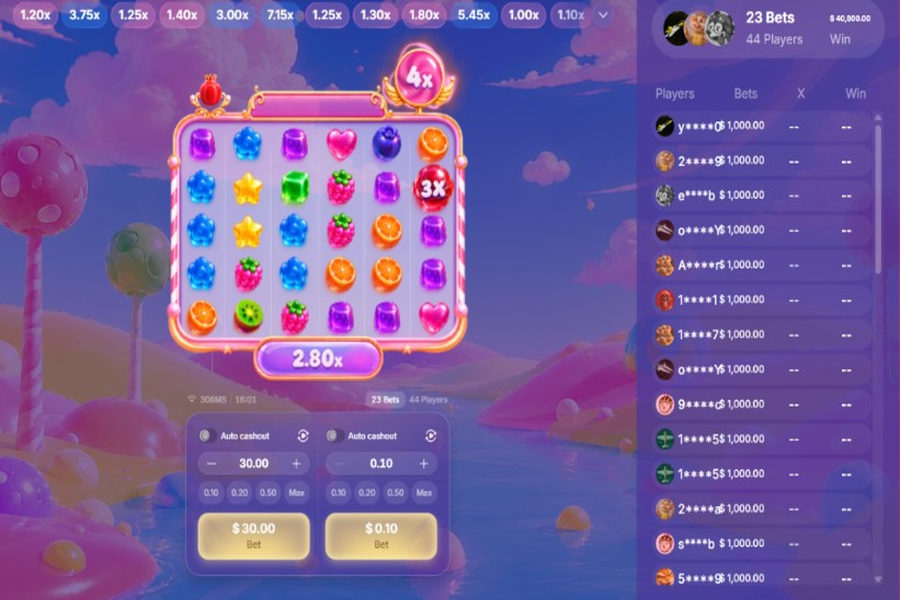
You choose your stake before the round begins. There are two bet panels, so you can place two bets if you want to, but you can leave the second one empty if you only want one. Once betting closes, symbols drop onto a board six columns wide and five rows deep, and everyone playing sees the same board.
You need eight or more of the same symbol anywhere on the grid to make a match. They can be scattered from one corner to the other and still count. The matching symbols pop, the multiplier goes up and fresh symbols tumble into the gaps. That’s a cascade. As long as the new board produces another match, the round carries on.
The important bit is that although those little wins build up the amount on offer, you still have to collect it.
Say you’ve put £2 on and a few matches have taken the multiplier to 2.5x. You can cash out for £5, including your stake, or see what the next drop brings. If it produces a board with no match, the round ends and the £5 you could have collected goes with it. You lose.
There are a couple of special symbols worth keeping an eye out for, too. Lollipops carry multipliers ranging from 2x to 500x, while the pomegranate can trigger the ‘Everybody Wins’ feature. In this case, ‘everybody’ means the players who still have a bet in the round when it appears. So there are some interesting elements to gameplay which can significantly change the prize pot, and probably your decision about whether or not to cash out as well.
Two Bets On The Same Board
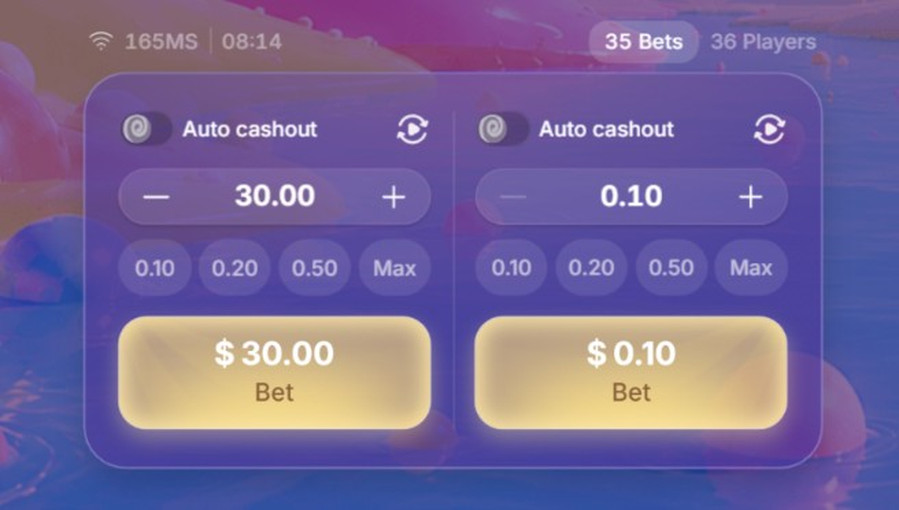
The two bet panels come in handy if you’re in two minds about when to collect. You could put £1 on each, set Auto Cash Out to 2x on the first and keep manual control of the second. That way you’ve made one decision before the first symbol has even dropped.
Say the multiplier lands on 2x. Your first bet automatically returns £2, which covers the £2 you staked across both panels. You can then watch the next cascade knowing you’ve broken even on the round. If you manage to collect the second bet at 4x, that’s another £4 back and a £4 win overall.
Of course, both bets depend on the same symbols. If the matches dry up before the first bet reaches its target and you haven’t collected the second one either, you lose both stakes.
Can You See When Other Players Cash Out?
Yes, and for me this is where PopX gets more interesting. The live panel shows when other players collect and how much they’ve won. You get a feel for when people are starting to lose their nerve, although anyone using Auto Cash Out might have made that decision before the round began.
There’s a slightly competitive element to watching a string of cash-outs appear while you’ve still got a bet running. It’s quite satisfying to hang on for one more match and get it. Equally, when the next drop produces absolutely nothing, you can see exactly who had the good sense to get out one move before you. Nobody else’s decision changes what lands on the board, but it does give you something to compare your own decision with.
Maximum Win And RTP
PopX has a maximum win of 25,000 times your original stake which is pretty massive. On a £1 bet that’s £25,000. The theoretical return to player is 97%, giving the game a house edge of 3%. That figure is an average across a large volume of bets, of course, so your own session won’t necessarily return anything close to that.